
Copper is everywhere. You’ll find it in wiring, plumbing, roofing, cash, electronics—you name it. But there’s one query that frequently comes up while people deal with this familiar reddish-orange metallic:
Is copper magnetic?
It is a simple question. The answer, even though, might puzzle you. If you’ve ever tried to paste a magnet to a copper pipe or a penny, you have likely observed that nothing happens.
So what’s happening right here? Let’s smash it down.
If you are curious about how copper interacts with magnets or why some metals are attracted to and others are not, read more as we dive deep into the magnetic character of copper.
What Does “Magnetic” Even Mean?
Before we can say whether copper is magnetic, let’s get a brief knowledge of magnetism.
In short, a material is considered magnetic if it’s attracted to a magnet or may be magnetized. This usually occurs because of how electrons spin and align inside the cloth. When the electrons are turned on, the material will become magnetic.
Common magnetic metals include:
- Iron
- Nickel
- Cobalt
These are ferromagnetic substances; because of this, they display robust magnetic properties. They’re the reason magnets keep on with your refrigerator.
Is Copper One of Those Metals?
The quick solution: No, copper isn’t always magnetic in the conventional sense.
If you place a copper wire or sheet near a magnet, you won’t see any enchantment. That’s because copper is a diamagnetic material. It creates a susceptible opposing magnetic field whilst exposed to a robust magnet, but it’s so vulnerable you’d never notice it in ordinary life.
So even as copper interacts with magnetic fields in a small way, it doesn’t attract magnets like iron or nickel.
But Wait—Copper and Magnets Do Interact… Don’t They?
Yes! That is what matters, and it makes things exciting without a doubt.
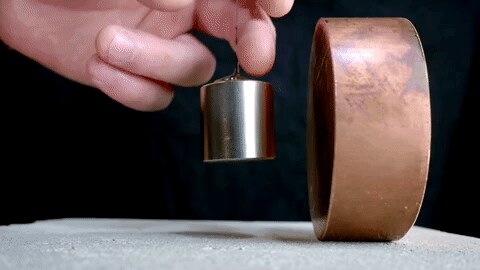
You could have seen cool science demonstrations in which a magnet falls slowly through a copper pipe. It looks like magic; however, it’s pure physics. Here’s why it takes place:
A magnet moving through a copper tube induces an electric current inside the copper. That modern, in turn, creates its magnetic field. This new subject opposes the falling magnet’s motion, slowing it down.
This is called Lenz’s Law, and even as copper itself isn’t magnetic, it performs a first-rate function in magnetic fields through its electrical conductivity.
Why Is Copper Used in Electrical Wiring, Then?
Copper’s actual superpower isn’t magnetism—it’s conductivity. It’s one of the great power conductors, the 2nd most effective after silver. That’s why you’ll locate it in:
- Power lines
- Electrical cars
- Circuit boards
- Transformers
In these programs, we don’t want copper to be magnetic. It might have interfered with signals or behaved unpredictably if it had been. Its non-magnetic nature makes it more stable and secure to apply in touchy structures.
Copper in Industry and CNC Machining
Copper’s non-magnetic and high-conductivity properties make it best for commercial use, mainly in CNC machining.
Whether you’re designing custom heat sinks, digital housings, or distinctive electric components, copper gives machinability and performance. You can discover different CNC machining Materials like brass, aluminum, and titanium, but copper stands out in electronics and thermal systems.
Its thermal conductivity and electric properties are astonishing, making it perfect for parts needing green heat dissipation.
What About Copper Alloys?
Here’s where humans get confused.
Copper is often blended with other factors to create alloys like:
Brass (copper + zinc)
Bronze (copper + tin)
Now, depending on what different metals are mixed in, the last alloy might show some magnetic properties. But in most ordinary uses, even those copper alloys stay non-magnetic.
Still, if an alloy consists of small amounts of iron or nickel, there’s a hazard that it could respond to magnets slightly.
So, Is Copper Ever Magnetic in Real Life?
Technically, yes—but in a vulnerable manner, it doesn’t count.
Copper does have a diamagnetic response, meaning it barely repels magnetic fields. But that is so minimal, you won’t sense or see it without a lab-grade system.
Here’s the breakdown:
Is copper interested in magnets? No.
Can it behave and respond to magnetic fields not directly? Absolutely.
Does it work with magnets in moving systems like vehicles or mills? Yes—and pretty correctly.
Fun Fact: Magnetic Braking Uses Copper
Some present-day trains and roller coasters use a machine known as eddy modern braking. This device pushes magnets close to copper plates to create resistance and slow matters down, with no bodily contact.
It’s easy. It’s quiet. It’s dependable.
And it all works because copper interacts with magnets without being magnetic.
Conclusion: The Truth About Copper and Magnets
So there you have it.
Copper isn’t always magnetic.
It doesn’t appeal to magnets and won’t stick to them. But that doesn’t mean it’s useless in magnetic structures—a long way from it. Thanks to its superb conductivity and potential to engage with magnetic fields, copper is crucial to our cutting-edge global.
Whether operating in electronics, commercial design, or engineering, copper’s non-magnetic nature offers it a first-rate facet.
Next time you see a twine, a circuit board, or a copper pipe, you’ll recognise—these things may not be magnetic, but it’s sincerely magic in its way.
Read More: What is Rafael Nadal Doing Now